

Content
Welcome to Kuruman
The Oasis of the Kalahari
Situated in the heart of the Northern Cape, Kuruman is one of South Africa’s most fascinating towns, where history, culture, natural wonders and modern industry come together. Known as the “Oasis of the Kalahari”, Kuruman is built around the famous Eye of Kuruman, a remarkable natural spring that delivers approximately 30 million litres of crystal-clear water every day, creating a lush green sanctuary surrounded by towering palm trees and indigenous vegetation.
As the largest town in the Ga-Segonyana Local Municipality, Kuruman serves as the commercial, tourism and agricultural hub of the Kalahari region. Located along the busy N14 highway between Upington and Gauteng, it welcomes thousands of travellers each year exploring the Northern Cape, Kalahari Desert and neighbouring Botswana and Namibia.


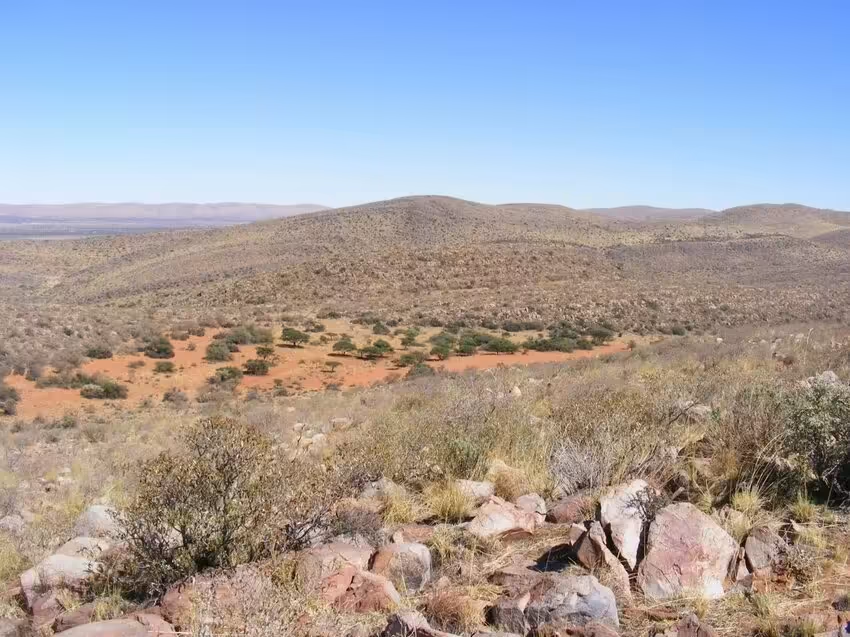

Whether you’re planning a holiday, overnight stop, business trip or family adventure, Kuruman offers comfortable accommodation, excellent restaurants, unique attractions and genuine Northern Cape hospitality.
Discover the History of Kuruman
Kuruman has one of the richest historical stories in the Northern Cape. The town derives its name from Chief Kudumane, leader of the local Tswana people, although over time the pronunciation evolved into “Kuruman”.
Modern Kuruman began in 1821 when Scottish missionary Robert Moffat established the London Missionary Society station. Moffat devoted nearly fifty years to the region, becoming one of South Africa’s most influential missionaries. During his time here he completed the first complete translation of the Bible into Setswana and built the famous Moffat Mission Church, completed in 1838, which still stands today as one of South Africa’s oldest mission churches.
Kuruman also played an important role in African exploration. The renowned explorer and missionary David Livingstone married Robert Moffat’s daughter, Mary, here before beginning his expeditions into central Africa.
Today these remarkable historical sites remain among Kuruman’s most visited attractions.
Why Visit Kuruman?
Kuruman offers visitors something very different from many South African destinations. Instead of bustling cities, visitors discover peaceful streets shaded by ancient Camel Thorn trees, crystal-clear springs, fascinating museums, dramatic caves and spectacular Kalahari scenery.
Its central location also makes Kuruman an excellent base for exploring the Northern Cape. Visitors can easily reach destinations including:
- Wonderwerk Cave
- Moffat Mission
- Eye of Kuruman
- Ga-Segonyana Heritage sites
- Boesmansgat Sinkhole
- Kalahari Meerkat Project
- Witsand Nature Reserve
- Kathu
- Hotazel
- Sishen
- Kuruman Game Breeding Centre
Whether you’re interested in history, geology, archaeology, bird watching, photography or simply relaxing beneath giant Camel Thorn trees, Kuruman delivers unforgettable experiences.
The Eye of Kuruman
The town’s most famous attraction is undoubtedly the Eye of Kuruman.
This incredible natural spring produces nearly 30 million litres of fresh water every day, making it one of the largest natural springs in the Southern Hemisphere.


The water feeds beautiful gardens, streams and wetlands that attract numerous bird species while supporting fish, freshwater crabs and rare aquatic life. Because of its ecological importance, fishing is prohibited, allowing visitors to enjoy an untouched natural environment.
The Eye has supplied water to local communities for centuries and remains the lifeblood of the town today.
A Town Built on Mining
Although tourism and agriculture remain important, Kuruman is also recognised as one of South Africa’s major mining centres.
The surrounding Kalahari Basin contains world-renowned deposits of:
- Manganese
- Iron Ore
- Crocidolite
- Tiger’s Eye
- Various semi-precious minerals
Nearby mining towns including Hotazel, Black Rock, Sishen and Kathu contribute significantly to the regional economy, making Kuruman an important service and business centre.
This balance between industry, tourism and agriculture gives Kuruman a unique character unlike any other town in the Northern Cape.
Green Kalahari Towns
The towns found in the Green Kalahari are:
Listing Logos